Avenir AI: An MIT-borne Startup Built at the Edge of Two Crises


by TWR. Editorial Team | Tuesday, Oct 21, 2025 for The Weekend Read. | Chat with us about this article and more at the 💬 purple chat below-right, our Concierge powered by Bizly.
Avenir AI, a HUMAN+ company, isn't just another thinly veiled AI-wrapper. It’s a window into what happens when ambitious young founders spot a two trillion-dollar industry stuck in the past and dare to reimagine it with cutting-edge tools backed by data, powered by AI. It’s also a case study in how a new generation, anxious about AI’s impact on work, might navigate, and even lead, the transformation.
Avenir AI Is Reinventing a $1.9 Trillion Industry - By applying AI “agents” to the complex world of employee benefits, Avenir is transforming outdated HR processes into real-time, data-driven workflows.
Co-Founders Ariadne Dulchinos + Maria Zou Exemplify Next-Gen AI Leaders - With roots at MIT, MIT Sloan, Apple, and Microsoft, they combine deep technical and financial chops with human-centered approaches to innovation, building tools that empower, not replace, people.
Enterprise-Ready from Day One - Avenir’s platform integrates with 50+ data sources, meets enterprise security standards, and has already delivered measurable ROI in Fortune 500 pilots.
A Blueprint for Students Navigating an AI-Transformed Job Market - Dulchinos’s path highlights how young professionals can thrive amid automation, by building with AI, leveraging institutional ecosystems, and staying focused on real-world impact.
Co-founded by MIT-trained computer scientist Ariadne Dulchinos and her MIT colleague Maria Zou, Avenir AI sits at the intersection of technology and employee benefits, a $1.9 trillion market riddled with inefficiency, opacity, and manual workflows. With a background in finance and private equity, and a degree from MIT Sloan, Zou bridges business insight with operational excellence. Her expertise in scaling organizations and driving go-to-market strategy ensures Avenir’s technology delivers real-world impact across the benefits ecosystem.
The company’s core product is a platform of AI “agents” designed to assist HR teams in analyzing benefits data, spotting inefficiencies, forecasting costs, and staying compliant with constantly changing regulations.
Dulchinos came to the problem with unusual clarity. As a researcher at MIT’s CSAIL and Media Lab, she had worked on machine learning systems. Later, at Apple and Microsoft, she built AI-powered B2B tools, including early iterations of the now-ubiquitous Copilot. But she was also paying attention to how these tools intersected with real people, particularly in high-stakes, high-friction environments like healthcare and employee well-being.
Zou, having conducted workplace well-being research, investment banking, and private equity, had seen how financial software restructured Wall Street. Together, they asked why the systems underpinning employee healthcare, insurance, and benefits were still cobbled together in spreadsheets and static PDFs.
From MIT Hackathons to Fortune 500 Pilots
Avenir's earliest momentum came from within MIT’s entrepreneurial ecosystem. The team won support from the Martin Trust Center, participated in the deltaV accelerator, and appeared in the the MIT $100K Competition and Harvard’s public health innovation initiatives.
These programs not only provided seed capital but gave Avenir credibility in front of investors and enterprise buyers.
"This summer in LA, we grew our team, built traction, and refined our product into what it is today."
The startup moved fast. Within months, it had built prototypes, signed enterprise design partners, and launched pilots. It quickly earned a place in Andreessen Horowitz’s prestigious Speedrun accelerator, a 12-week program that accepts only a fraction of its thousands of applicants. By the end of the summer 2025 cohort, Avenir had raised seven figures, including a direct investment from a16z, and completed pilot deployments with Fortune 500 companies.

AI Agents, Not Algorithms
Avenir’s platform is centered around a team of modular, task-specific “AI workers.” These aren’t abstract algorithms behind the scenes. They are purpose-built assistants embedded in the workflows of HR and benefits teams. Examples include:
Claims Agent: Parses health insurance data to flag top cost drivers.
Engagement Agent: Analyzes how employees are using wellness programs.
Compliance Agent: Tracks regulatory updates and alerts HR to policy risks.
Outreach Agent: Suggests when and how to communicate benefits changes to specific employee segments.
Each agent operates through a conversational interface. HR staff can ask natural-language questions like “What benefits are underused by engineering teams?” and receive real-time answers backed by multi-source data analysis.
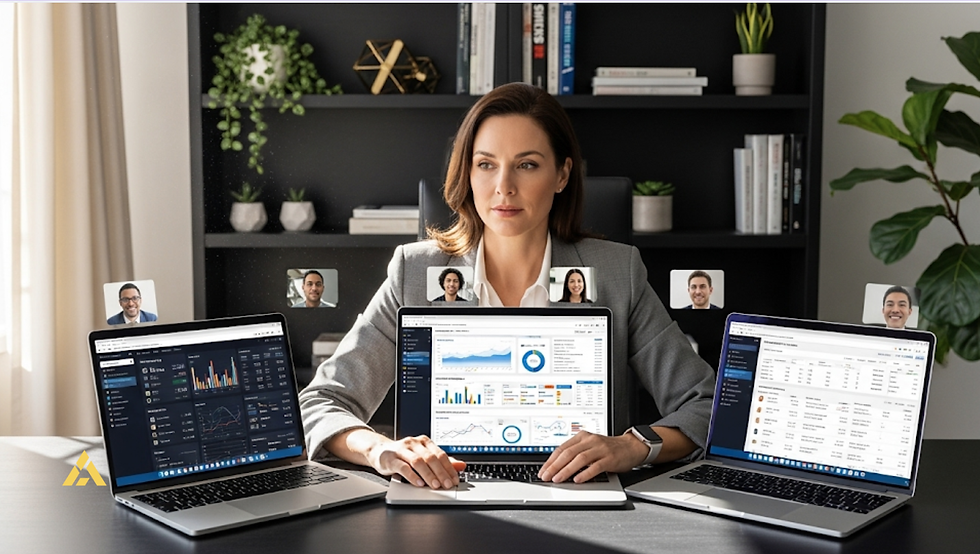
The Avenir AI platform acts like a team of specialized virtual analysts that constantly monitor and manage different aspects of employee benefits. The system integrates data from over 50 sources, including internal HR systems, industry benchmarks, and public forums, to ensure its recommendations are accurate and contextually relevant. All outputs are auditable, explainable, and built for human review. Insights are presented in dynamic dashboards designed to augment judgment, not replace it.
The Business Case for Better Benefits
The pitch to customers is clear: make better benefits decisions, faster, with less waste. Instead of spending weeks compiling annual reports or waiting on consultants to analyze claims data, teams using Avenir can ask a question in real time and get a decision-ready answer.
Early adopters include HR leaders at major corporations, as well as consultants and brokers who support them. For a benefits manager, Avenir can surface patterns in medical claims that suggest, say, rising orthopedic costs, allowing for proactive wellness programs or renegotiation with insurers.
The company’s go-to-market strategy focuses on landing small pilots, proving value in under six weeks, then expanding to larger contracts.
For brokers, the platform accelerates client service and adds AI credibility to their offering. Even finance teams benefit from better forecasting and cost control insights, all without needing to learn a new system.
Fundraising With Force
In a fundraising environment where less than 2 percent of venture capital goes to women-led startups, Avenir’s early wins stand out. The company raised seven figures within its first year, with much of the funding coming before revenue. Its Speedrun cohort gave it exposure to top-tier mentors, potential customers, and future partners.
The business model is classic B2B SaaS. Clients pay a subscription to access the AI platform, with pricing likely tied to company size or volume of benefits data. The company’s go-to-market strategy focuses on landing small pilots, proving value in under six weeks, then expanding to larger contracts. This “land and expand” motion has become common in enterprise AI, and Avenir’s early traction suggests it’s working.
A Role Model in the Age of AI Anxiety
Avenir’s story isn’t just about product-market fit. It’s also about what it means to be a young professional in a workforce being fundamentally altered by AI.
Surveys show that 72 percent of Gen Z workers expect AI to reduce traditional entry-level job opportunities in the next five years, and 65 percent believe a college degree alone won’t protect them from automation. Meanwhile, the World Economic Forum predicts over 90 million jobs will be displaced by AI by 2030, even as 78 million new ones are created.
"We decided to tackle healthcare for people like us, and to help the HR/benefits leaders we’d been talking to."
These co-founders offer a counterexample. They didn’t avoid AI. They built with it. They made themselves indispensable by designing tools that augment, not replace, human teams. The platform doesn’t eliminate benefits managers. It makes them more effective. In doing so, they carved out roles that didn’t exist and ensured that they wouldn’t be automated away.
Their story also reflects broader mindsets that students can adopt:
Don’t just look for jobs. Make them.
Learn to work with AI, not against it.
Use your ecosystem.
Push through the odds.
Students, AI, and the Future of Work
The story of Dulchinos, Zou, and Avenir-AI carries broader implications for students and new graduates entering a workforce increasingly influenced by AI. While forecasts predict that up to 30 percent of U.S. jobs could be automated by 2030, they also suggest a net creation of 78 million new jobs. Entry-level positions appear especially vulnerable. Nearly 50 million U.S. jobs typically filled by young or less-experienced workers could be at risk in the coming years. Many Gen Z job seekers fear that AI undermines the value of their college degrees.
Yet, the flip side of the AI revolution is the creation of new opportunities. In one survey, 28 percent of Gen Z respondents expressed interest in self-employment as a response to AI disruption. For members of Gen Z and upcoming graduates, this means that agility and initiative can pay off immensely.
Their journey offers key lessons:
Embrace Continuous Learning and Technical Depth
Focus on Solving Human-Centric Problems
Leverage Communities and Resources
Stay Adaptive and Results-Oriented
The best way to prepare for an AI-shaped job market is to become an active participant in shaping it. Whether that means launching a startup, as Ariadne and Maria did, or simply bringing an innovative mindset into whatever organization you join, those who approach AI as a tool to be harnessed will be the ones owning the future.
TWR. Last Word: "The real disruptors in AI aren't replacing people, they’re building tools that make them impossible to replace."
Insightful perspectives and deep dives into the technologies, ideas, and strategies shaping our world. This piece reflects the collective expertise and editorial voice of The Weekend Read —🗣️Read or Get Rewritten | www.TheWeekendRead.com
Sources
Avenir AI. (2025). Company homepage. Retrieved October 20, 2025, from https://avenir.com.ai
Exploding Topics. (2024). AI impact on future job roles. Retrieved October 20, 2025, from https://explodingtopics.com
Her Hustle. (2025). Founder profiles. WWV Labs. Retrieved October 20, 2025, from https://herhustle.telilabs.com
National University. (2024). The impact of artificial intelligence on the workforce. Retrieved October 20, 2025, from https://nu.edu
Speedrun by Andreessen Horowitz. (2025). Cohort company profiles. Retrieved October 20, 2025, from https://speedrun.a16z.com
The VC Corner. (2025). Speedrun 005 Demo Day highlights. Retrieved October 20, 2025, from https://thevccorner.com
World Economic Forum. (2023). The future of jobs report 2023. Retrieved October 20, 2025, from https://www.weforum.org

Comments